


Complete Guide to Choosing a Pneumatic Cylinder: From A to Z
Jun 03 2026A complete A-to-Z guide to selecting pneumatic cylinders, including force calculation, bore sizing, stroke selection, cylinder types, solenoid valves, sensors, and accessories for industrial automation applications.
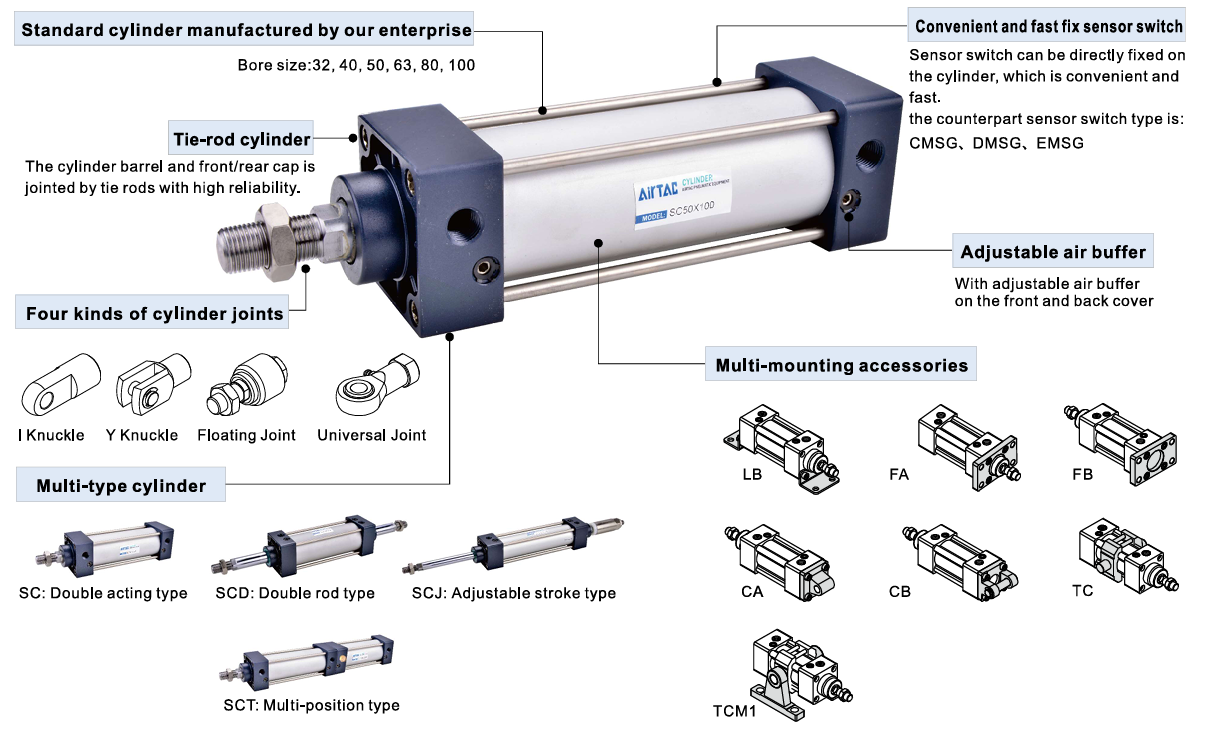
Pneumatic cylinders are essential components in automation systems, production lines, packaging machines, presses, and countless industrial applications.
However, choosing the right pneumatic cylinder is not always straightforward.
Many users experience problems such as:
- Insufficient pushing force
- Slow cylinder movement
- Excessive vibration
- Short service life
- High compressed air consumption
👉 In most cases, these problems originate from selecting the wrong cylinder.
In this comprehensive guide, you'll learn how to choose a pneumatic cylinder step by step, from basic concepts to practical selection criteria.
Step 1: Define Your Application
Before selecting a cylinder, ask yourself:
- Is it used for pushing?
- Clamping?
- Lifting?
- Pressing?
- Positioning?
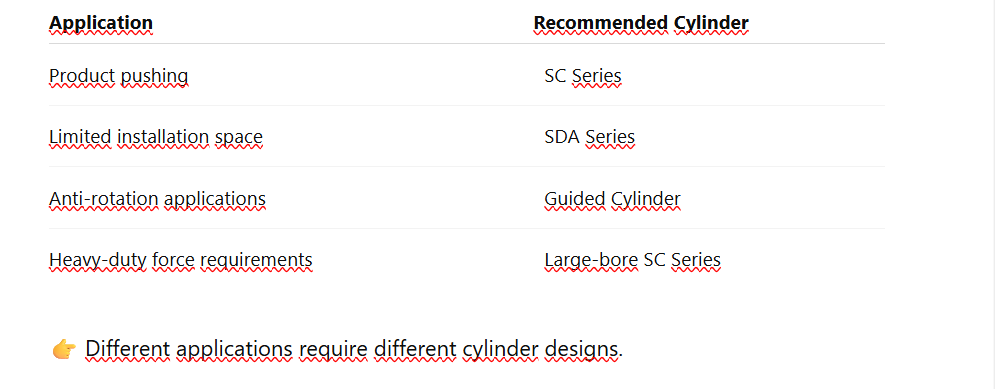
Examples:
Step 2: Determine the Required Force
Force is the most critical factor when selecting a cylinder.
Choosing a cylinder with insufficient force may result in:
- Failure to move the load
- Unstable machine operation
The basic formula is:
F=P\times A
Where:
- F = Force
- P = Pressure
- A = Piston Area
Example
If the load is approximately:
- 100 kg
And the operating pressure is:
- 6 bar
A cylinder such as:
- SC50
- SC63
may be suitable, depending on the safety factor.
Step 3: Choose the Correct Bore Size
What Is Bore?
The bore is the internal diameter of the cylinder piston.
Common bore sizes include:
- 32 mm
- 40 mm
- 50 mm
- 63 mm
- 80 mm
- 100 mm
How Does Bore Affect Performance?
Bore directly influences:
- Pushing force
- Air consumption
Larger bores provide:
✅ Greater force
❌ Higher compressed air consumption
Step 4: Select the Appropriate Stroke Length
What Is Stroke?
Stroke is the distance the piston travels.
Common stroke lengths:
- 50 mm
- 100 mm
- 200 mm
- 300 mm
How to Choose Stroke Length
General rule:
Stroke ≥ Required travel distance
Example:
If the product needs to move 80 mm,
→ Select a 100 mm stroke cylinder.
Step 5: Choose the Right Cylinder Type
SC Series
Advantages:
- Cost-effective
- High force output
- Easy replacement
SDA Series
Advantages:
- Compact design
- Space-saving installation
Guided Cylinders
Advantages:
- Anti-rotation capability
- Higher positioning accuracy
- Better stability
Step 6: Decide Whether You Need Magnetic Sensors
If your system includes:
- PLC control
- Position monitoring
- Cycle counting
You should choose a cylinder with a magnetic piston.
Example:
SC63x100-S
The letter "S" indicates:
👉 Magnetic piston version
Step 7: Select the Proper Mounting Method
Common mounting styles include:
- Foot Mount
- Front Flange
- Rear Flange
- Clevis Mount
Incorrect mounting may cause:
- Excessive vibration
- Side loads
- Reduced cylinder lifespan
Step 8: Select the Solenoid Valve
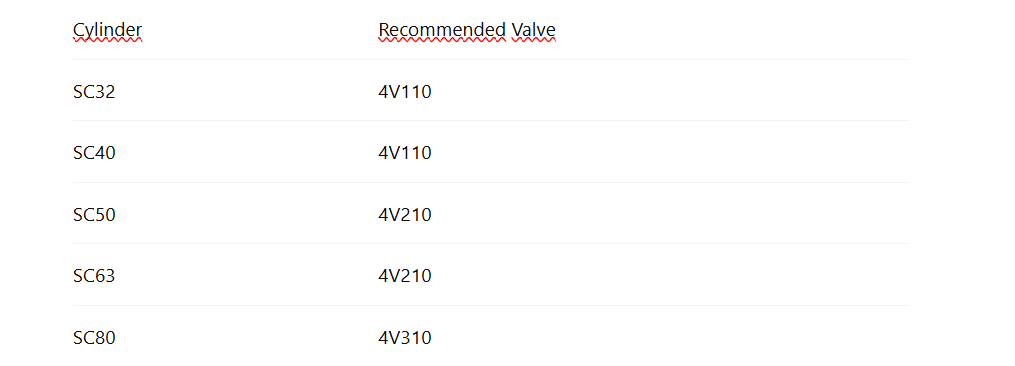
The solenoid valve controls cylinder movement.
Typical recommendations:
Step 9: Choose the Right FRL Unit
FRL stands for:
- Filter
- Regulator
- Lubricator
Functions:
- Removes water
- Removes dust
- Stabilizes air pressure
- Protects cylinder seals
Step 10: Verify the Ordering Code
Example:
SC63x100-S-CB
This code provides information about:
- Series
- Bore size
- Stroke length
- Magnetic piston
- Optional configurations
Common Mistakes When Choosing Pneumatic Cylinders
Choosing a Bore That Is Too Small
Result:
- Insufficient force
Choosing an Excessively Long Stroke
Result:
- Increased vibration
- Higher cost
Choosing the Wrong Solenoid Valve
Result:
- Slow cylinder response
Operating Without an FRL Unit
Result:
- Premature seal wear
- Reduced cylinder lifespan
Pneumatic Cylinder Selection Checklist
Before placing an order, verify:
✅ Application requirements
✅ Required force
✅ Bore size
✅ Stroke length
✅ Operating pressure
✅ Cylinder type
✅ Sensor requirements
✅ Mounting style
✅ Solenoid valve
✅ FRL unit
👉 This simple checklist can prevent most cylinder selection mistakes.
Conclusion
To choose the right pneumatic cylinder, you must determine:
- Application
- Required force
- Bore size
- Stroke length
- Cylinder type
- Solenoid valve
- Air preparation equipment
👉 There is no single cylinder model that fits every application.
👉 Selecting the correct cylinder from the beginning will improve system reliability, reduce operating costs, and maximize equipment lifespan.
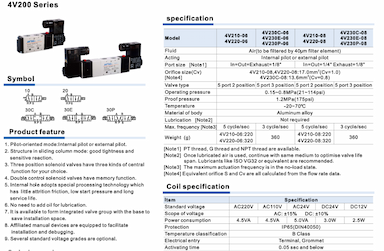
How to Select AirTAC Solenoid Valves from A-Z (With Technical Guidance)

AirTAC Pneumatic Combo Solution – Valve + Cylinder + Air Filter
Where to Buy Genuine AirTAC Pneumatic Valves – Trusted Suppliers
Latest AirTAC Solenoid Valve Price List – 2026 Update
AirTAC Solenoid Valve Accessories – Quick Connects, Silencers, and Sub-Bases
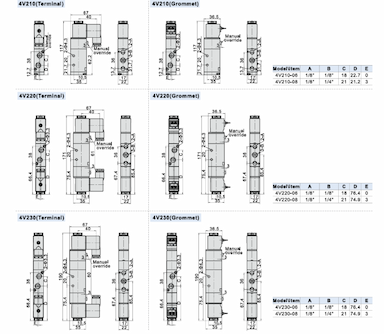
Top-Selling AirTAC 4V Series Solenoid Valve Models in 2026
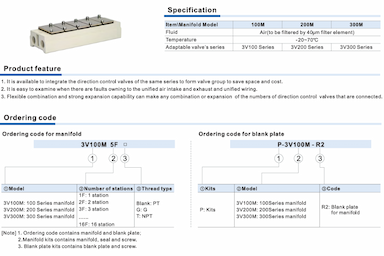
AirTAC Solenoid Valve Catalog – Full Guide to Download and Use the PDF
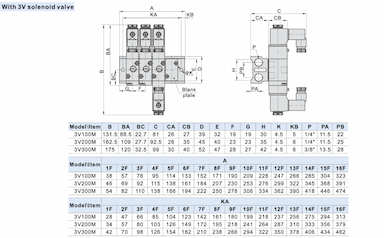
Complete AirTAC Solenoid Valve Specification Table – Your Ultimate Guide
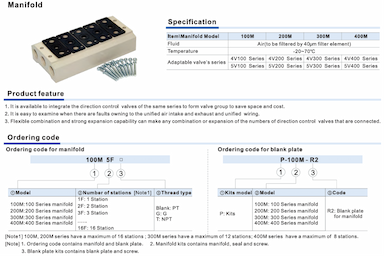
AirTAC Solenoid Valve Maintenance Checklist – Troubleshooting Guide
Solenoid Valve Vibration and Noise – Quick Troubleshooting Guide for Pneumatic Systems