


When Should You Use a Solenoid Valve Manifold (Valve Island)?
Jun 19 2026A solenoid valve manifold (valve island) is a pneumatic solution that integrates multiple solenoid valves into a single base unit, making the system more compact, reducing wiring and tubing, and improving stability and maintenance efficiency. It is widely used in automated production lines with multiple cylinders and continuous operation requirements.
1. Introduction to Solenoid Valve Manifold
In industrial pneumatic systems, a solenoid valve manifold (valve island) is a solution that integrates multiple solenoid valves onto a single shared base, forming a unified control assembly.
Instead of installing each valve separately, a manifold system helps to:
- Reduce coil wiring complexity
- Reduce air tubing length
- Improve maintenance efficiency
- Increase system stability and reliability
This makes it an essential solution for modern automation systems.
2. What is a Solenoid Valve Manifold?
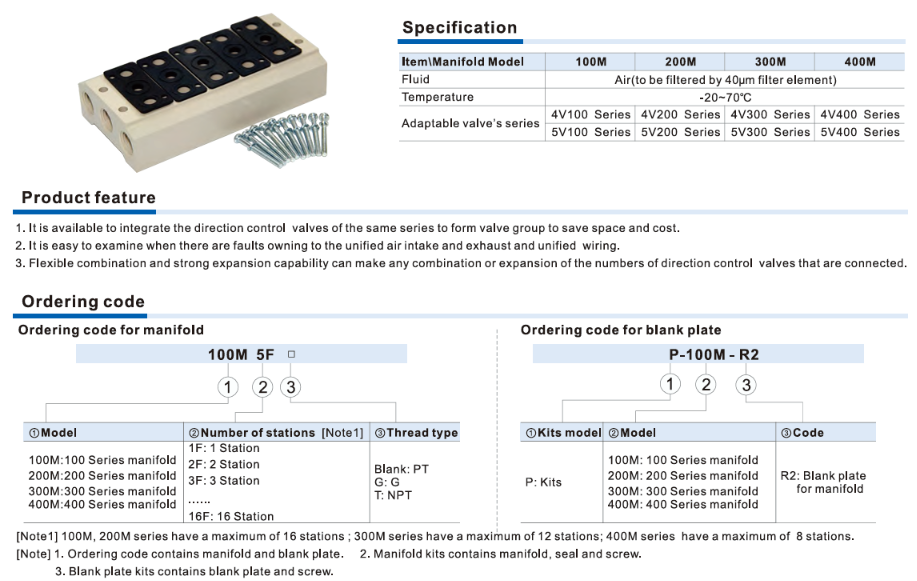
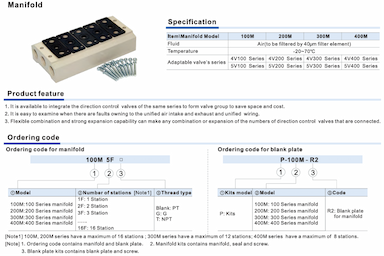
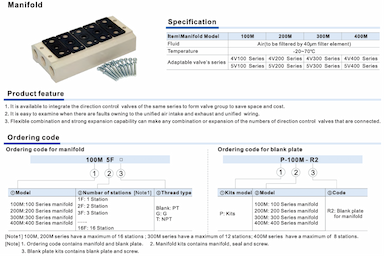
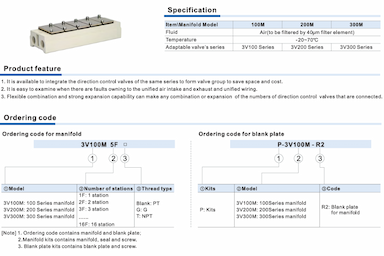
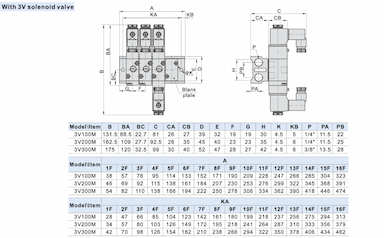
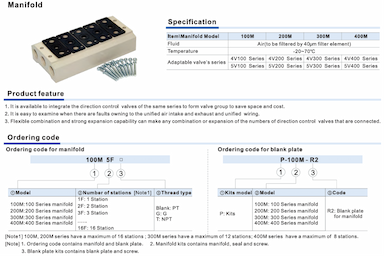
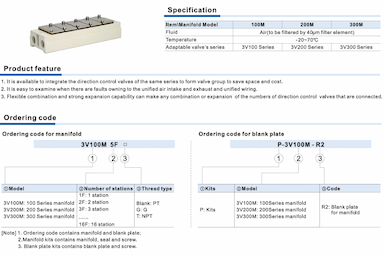
A solenoid valve manifold (also called a pneumatic valve base) is a structure where multiple solenoid valves are mounted on a single aluminum base with internal air channels.
The system consists of:
- Manifold base (aluminum block with internal air passages)
- Solenoid valves mounted in stations
- Blank plates for unused positions
- Shared air supply and exhaust ports
👉 Each valve operates independently while sharing a common air distribution system.
3. AirTAC Manifold System Structure
3.1. Manifold Base
The main body is made of aluminum alloy and contains internal air flow channels that distribute compressed air to each valve station.
3.2. Solenoid Valves
Common AirTAC series used in manifold systems include:
- 3V100 / 3V200 / 3V300 series
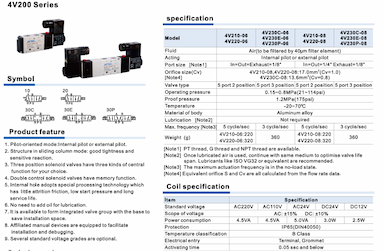
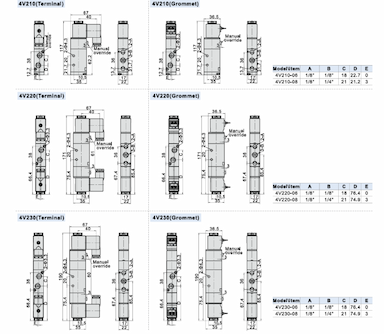
- 4V210 / 4V220 / 4V230 series
These valves control airflow direction for pneumatic actuators such as cylinders.
3.3. Blank Plate
Blank plates are used to seal unused valve positions, allowing future expansion without modifying the base structure.
4. When Should You Use a Solenoid Valve Manifold?
4.1. When the system has multiple cylinders
If a pneumatic system includes 4 or more cylinders, using individual valves may cause:
- Complex coil wiring
- Multiple air leakage points
- Difficult signal tracking from PLC systems
👉 A manifold system centralizes all valves into one compact unit, making control easier and more efficient.
4.2. In industrial automation lines
Manifold systems are widely used in:
- Packaging machines
- Pick-and-place robotic systems
- Assembly production lines
Benefits include:
- Faster installation time
- Standardized PLC control structure
- Easier modular maintenance
4.3. When reducing system errors is important
Traditional valve setups may suffer from:
- Incorrect coil wiring
- Air leakage at fittings
- Difficulty diagnosing individual valve issues
👉 A manifold system significantly reduces these failure points by minimizing external connections.
4.4. When space optimization is required
Manifolds help to:
- Reduce air tubing length
- Eliminate excessive fittings
- Save space inside control cabinets or machines
This makes system layout cleaner and more efficient.
5. When You Should NOT Use a Manifold
A manifold system is not always necessary. It is not recommended when:
- The system only has 1–2 cylinders
- The machine is small and cost-sensitive
- Frequent layout changes are required
👉 In these cases, standalone 3V or 4V solenoid valves are more practical.
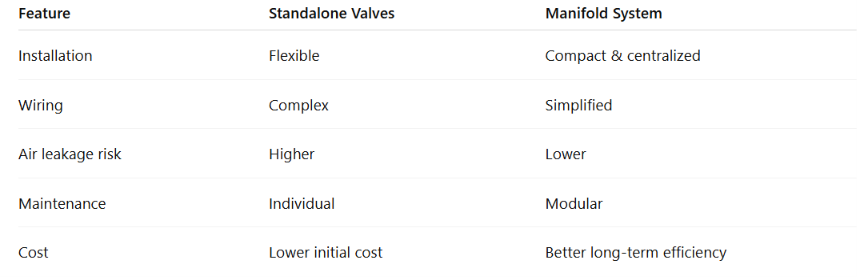
6. Comparison: Standalone Valves vs Manifold System
7. Practical Applications
Solenoid valve manifold systems are widely used in:
- High-speed packaging machines
- Industrial automation production lines
- Multi-cylinder pneumatic systems
- Robotics and pick-and-place systems
- Factory automation equipment
8. Conclusion
A solenoid valve manifold is an optimal solution for modern pneumatic systems, especially in industrial automation environments.
Key advantages:
- Compact system layout
- Reduced wiring and tubing complexity
- Lower risk of system errors
- Easier maintenance and expansion
- Higher operational stability
👉 It has become a standard configuration in medium and large-scale industrial pneumatic systems.
How to Select AirTAC Solenoid Valves from A-Z (With Technical Guidance)

AirTAC Pneumatic Combo Solution – Valve + Cylinder + Air Filter
Where to Buy Genuine AirTAC Pneumatic Valves – Trusted Suppliers
Latest AirTAC Solenoid Valve Price List – 2026 Update
AirTAC Solenoid Valve Accessories – Quick Connects, Silencers, and Sub-Bases
Top-Selling AirTAC 4V Series Solenoid Valve Models in 2026
AirTAC Solenoid Valve Catalog – Full Guide to Download and Use the PDF
Complete AirTAC Solenoid Valve Specification Table – Your Ultimate Guide
AirTAC Solenoid Valve Maintenance Checklist – Troubleshooting Guide
Solenoid Valve Vibration and Noise – Quick Troubleshooting Guide for Pneumatic Systems