


Pneumatic Cylinder Selection Checklist for Automation Systems
May 24 2026This pneumatic cylinder checklist helps you select the correct bore, stroke, and cylinder type for automation systems. Learn the key factors for stable operation and longer system lifespan.
Why Do You Need a Pneumatic Cylinder Selection Checklist?
Many pneumatic systems fail because of:
- Incorrect bore selection
- Incorrect stroke length
- Wrong cylinder type
- Ignoring actual load conditions
👉 The result:
- Weak cylinder force
- Vibration
- Excessive air consumption
- Short cylinder lifespan
- Unstable machine performance
👉 A proper checklist helps you:
- Select cylinders faster
- Reduce design mistakes
- Improve system reliability
- Increase machine lifespan
Checklist 1: Determine the Actual Load
This is the most important step.
You must know:
- How heavy is the load?
- Is the cylinder pushing horizontally or lifting vertically?
- Is there friction?
- Is there side load?
👉 Many people only calculate product weight and forget:
- Friction
- Acceleration
- Side load
→ This leads to incorrect cylinder selection.
Horizontal Load vs Vertical Load
Horizontal Load
Usually:
- Requires less force
- But friction from guides and rails must be considered
Vertical Load
If lifting vertically:
- Much higher force is required
👉 Because the cylinder must fully overcome gravity.
Checklist 2: Select the Correct Cylinder Bore
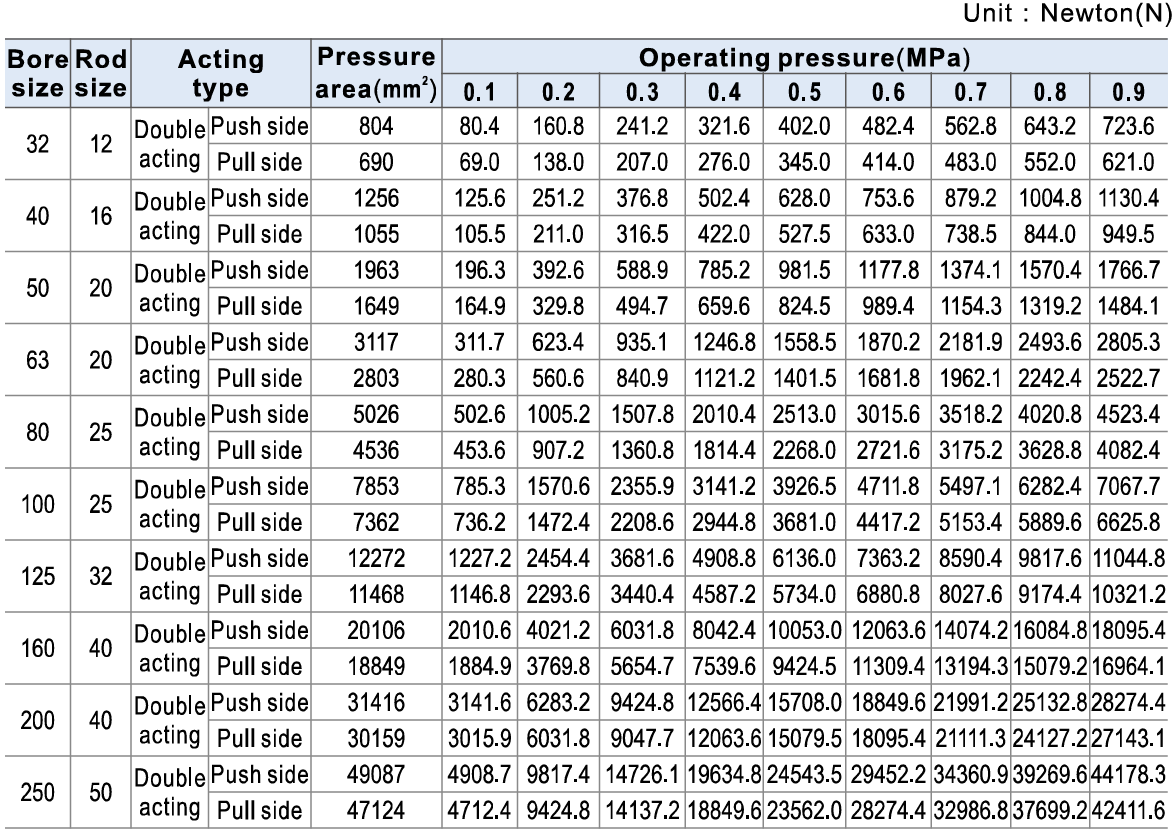
Bore size directly determines cylinder force.
👉 Larger bore:
- Produces greater force
- But consumes more compressed air
F=P×AF = P \times AF=P×A
Where:
- F = Force
- P = Pressure
- A = Piston area
Select Bore Based on Actual Force Requirements
In most applications:
- Cylinder force should exceed required force by 30–50%
Example:
- Required force = 50kg
- Recommended cylinder force = 70kg
👉 This helps:
- Improve stability
- Reduce vibration
- Extend system lifespan
Checklist 3: Choose the Correct Stroke Length
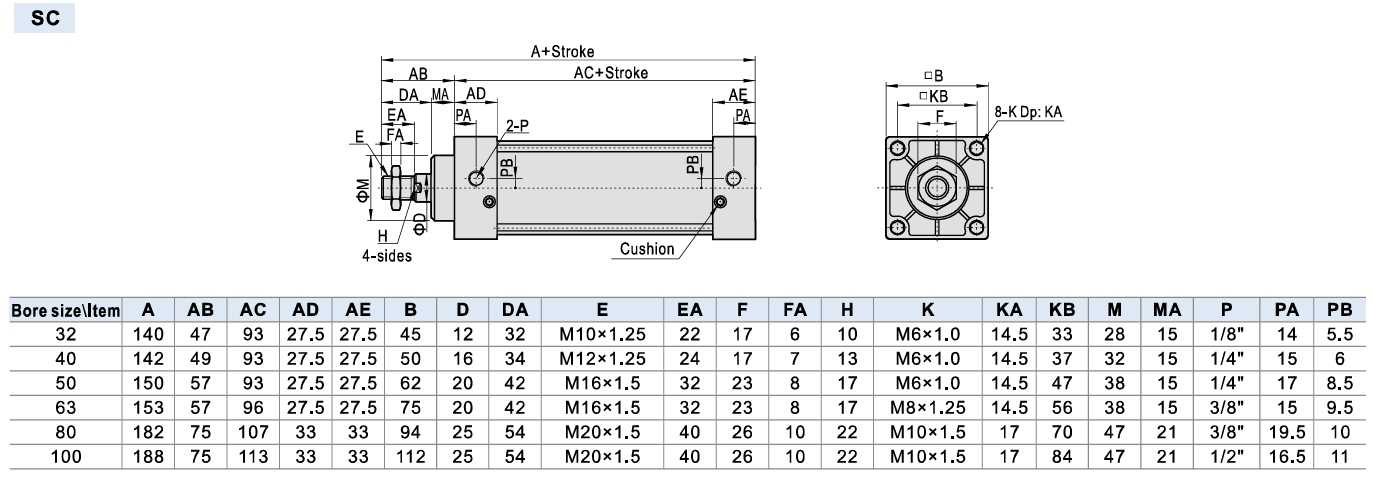
Stroke is the cylinder travel distance.
👉 Incorrect stroke selection may cause:
- Cylinder vibration
- Unstable operation
- Increased side load
Avoid Excessively Long Stroke
Long stroke:
- Makes the piston rod unstable
- Reduces overall system rigidity
👉 If long stroke is necessary:
- Guided cylinders are recommended
Checklist 4: Choose the Correct Cylinder Type
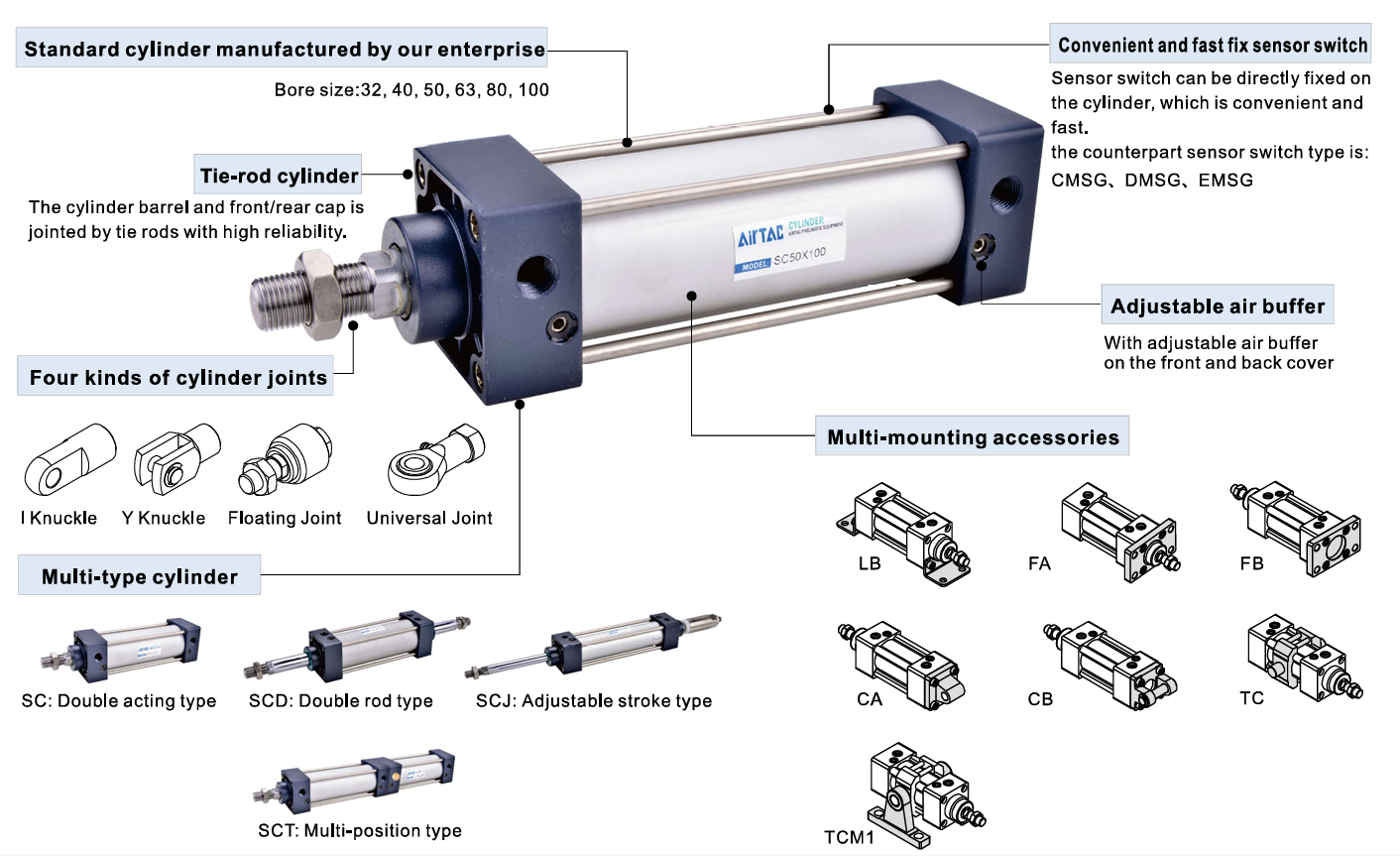
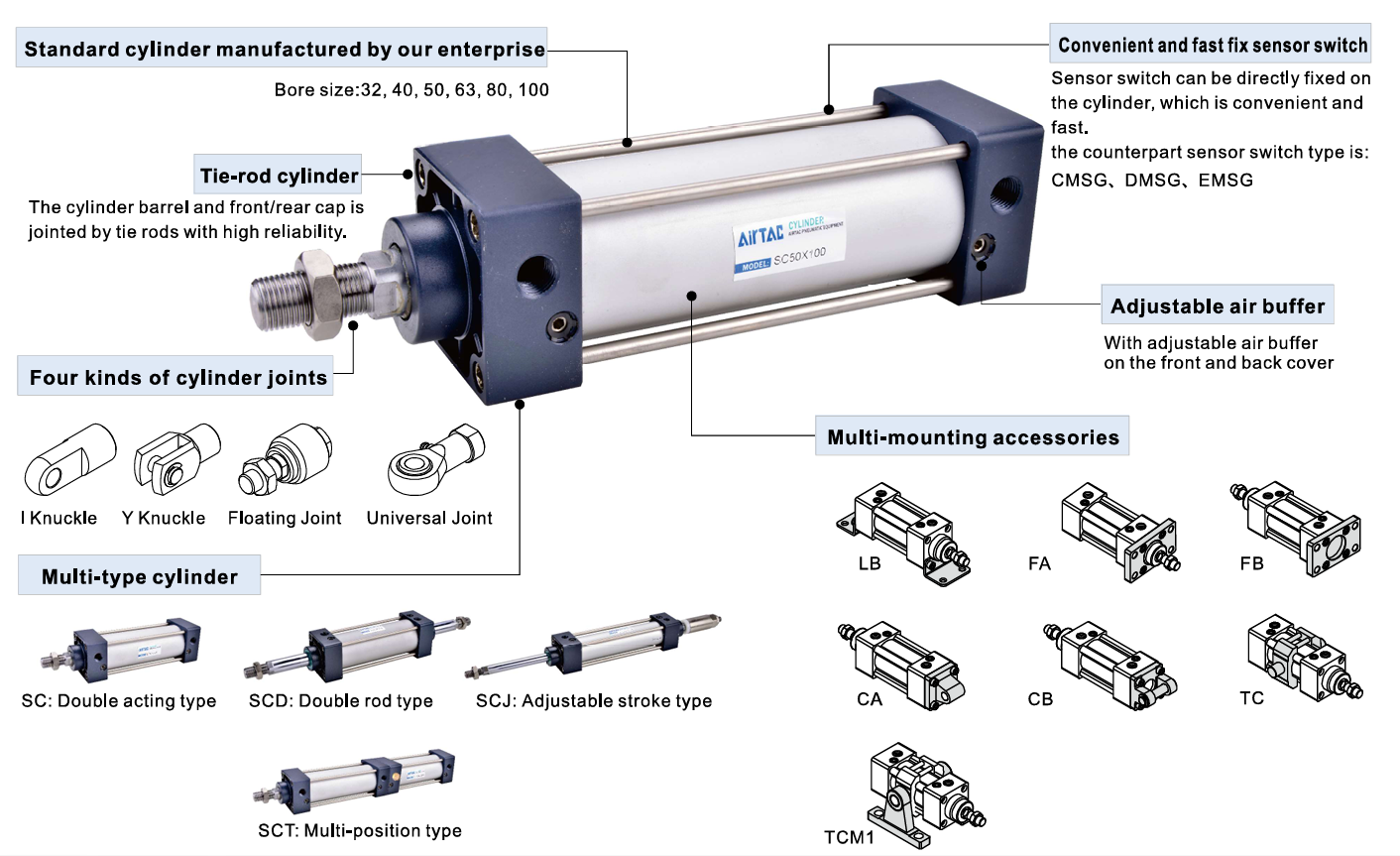
Not every system should use SC cylinders.
👉 Choosing the wrong cylinder type may cause:
- Vibration
- Instability
- Unnecessary cost
When Should You Use SC Cylinders?
SC cylinders are suitable for:
✅ Medium loads
✅ General automation
✅ Standard industrial machines
When Should You Use Compact Cylinders?
Compact cylinders are suitable for:
✅ Limited installation space
✅ Short stroke applications
✅ Compact machines
When Should You Use Guided Cylinders?
Guided cylinders are suitable for:
✅ Side load applications
✅ Anti-rotation requirements
✅ Off-center loads
✅ Long stroke systems
Checklist 5: Check for Side Load
This is one of the most commonly ignored problems.
If the load:
- Is off-center
- Creates lateral force
👉 The cylinder may:
- Vibrate
- Bend the piston rod
- Wear seals quickly
Common Signs of Side Load
- Misaligned movement
- Piston rod vibration
- Unusual noise
- Rapid seal wear
Solutions
✅ Use guided cylinders
✅ Use dual rod cylinders
✅ Reduce side load
Checklist 6: Check Airflow Capacity
Many systems:
- Have enough pressure
- But still suffer from weak cylinder force
👉 The real problem:
- Insufficient airflow
What Should Be Checked?
Solenoid Valve
If the valve:
- Is too small
- Has low airflow capacity
→ The cylinder becomes weak.
Air Tubing
Small tubing:
- Restricts airflow
- Causes pressure drop
FRL Unit
Clogged filters:
- Reduce airflow significantly
Checklist 7: Select the Proper Mounting Style
Mounting style affects:
- Stability
- Side load
- Cylinder lifespan
Common Mounting Types
Foot Mounting
- Most common
- Easy to install
Front Flange Mounting
- Strong and stable
- Good for straight pushing force
Rear Clevis Mounting
- Allows slight movement
- Reduces alignment stress
Complete Pneumatic Cylinder Selection Checklist
✅ Determine actual load
✅ Calculate required force correctly
✅ Select proper bore size
✅ Select proper stroke length
✅ Choose the correct cylinder type
✅ Check side load conditions
✅ Check airflow capacity
✅ Select proper mounting style
👉 This checklist is extremely useful for all pneumatic systems.
Conclusion
Choosing the correct pneumatic cylinder helps:
- Improve system stability
- Reduce machine failures
- Increase machine lifespan
- Reduce compressed air consumption
👉 For efficient system performance:
- Never choose cylinders based on guesswork
- Always calculate actual load conditions
- Always check side load and airflow
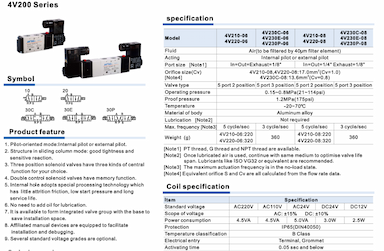
How to Select AirTAC Solenoid Valves from A-Z (With Technical Guidance)

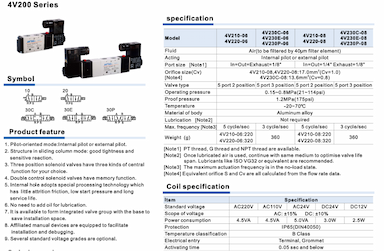
AirTAC Pneumatic Combo Solution – Valve + Cylinder + Air Filter
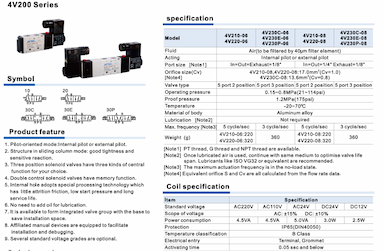
Where to Buy Genuine AirTAC Pneumatic Valves – Trusted Suppliers
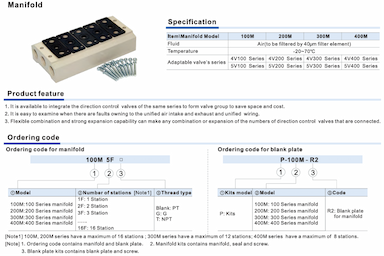
Latest AirTAC Solenoid Valve Price List – 2026 Update
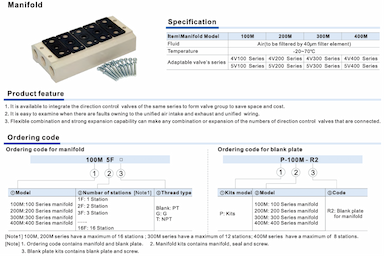
AirTAC Solenoid Valve Accessories – Quick Connects, Silencers, and Sub-Bases
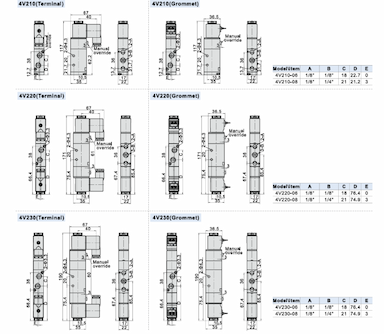
Top-Selling AirTAC 4V Series Solenoid Valve Models in 2026
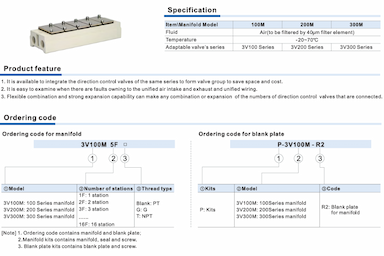
AirTAC Solenoid Valve Catalog – Full Guide to Download and Use the PDF
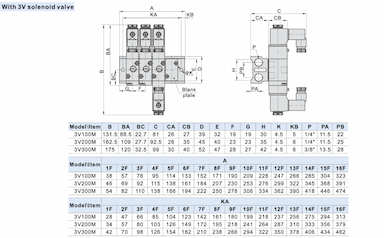
Complete AirTAC Solenoid Valve Specification Table – Your Ultimate Guide
AirTAC Solenoid Valve Maintenance Checklist – Troubleshooting Guide
Solenoid Valve Vibration and Noise – Quick Troubleshooting Guide for Pneumatic Systems