


What is Cylinder Bore? How to Choose the Right Size
May 06 2026Cylinder bore is one of the most important parameters affecting pneumatic cylinder force. This article explains what bore is, how to choose the right size, and common mistakes when selecting pneumatic cylinders.
What is Cylinder Bore?
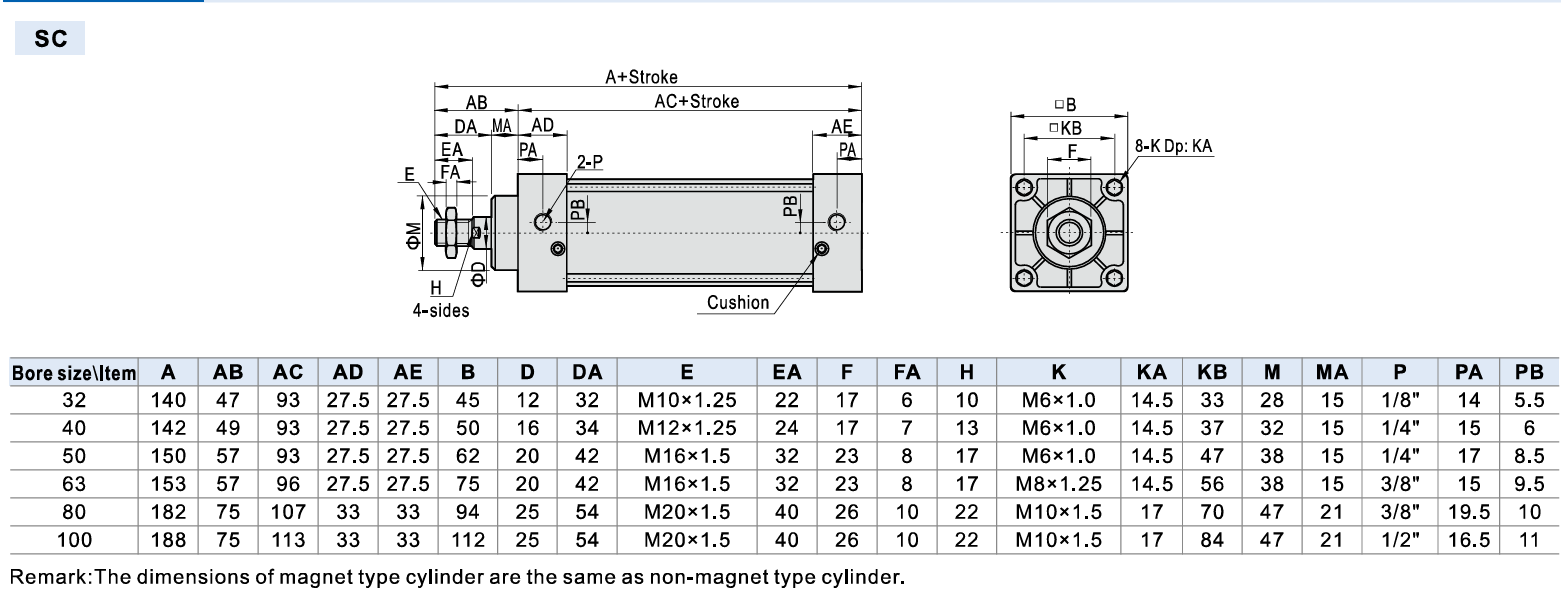
Cylinder bore refers to the diameter of the piston inside a pneumatic cylinder
. It is one of the most important parameters because it directly affects:
- Cylinder force
- Overall cylinder size
- Air consumption
- Load capacity
Examples:
- 32mm bore
- 50mm bore
- 63mm bore
- 100mm bore
👉 The larger the bore, the greater the output force.
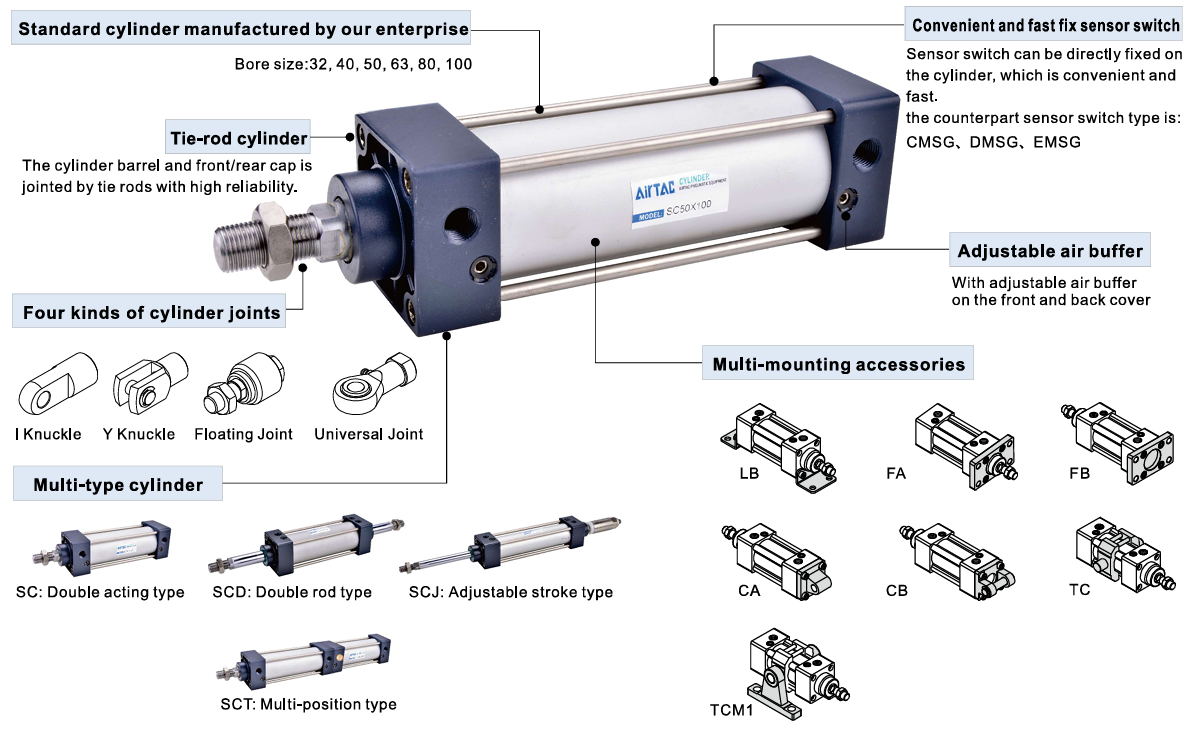
How Does Bore Affect a Pneumatic Cylinder?
Cylinder Force
A larger bore means:
- Larger piston area
- Higher pushing force
For example:
- Bore 32 → light-duty applications
- Bore 63 → medium-duty applications
- Bore 100 → heavy-duty applications
Air Consumption
Larger bore cylinders:
- Consume more compressed air
- Require larger air compressors
👉 This is one of the most common mistakes when selecting a pneumatic cylinder.
Size and Weight
Larger bore cylinders are:
- Bigger
- Heavier
- More demanding in installation space
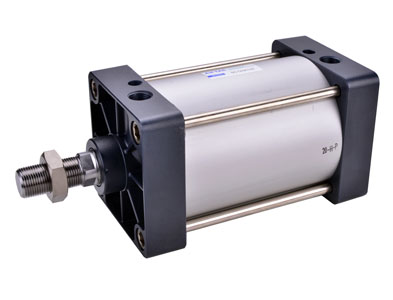
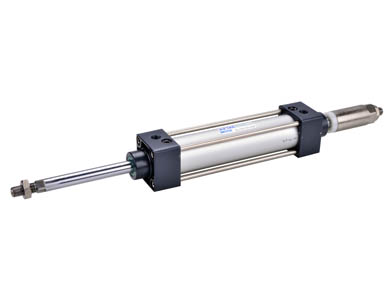
How to Calculate Cylinder Force from Bore
Cylinder force mainly depends on:
- Air pressure
- Piston area
Basic formula:
F=P×AF = P \times AF=P×A
Where:
- F = force
- P = pressure
- A = piston area
👉 A larger bore creates a larger piston area, resulting in higher force output.
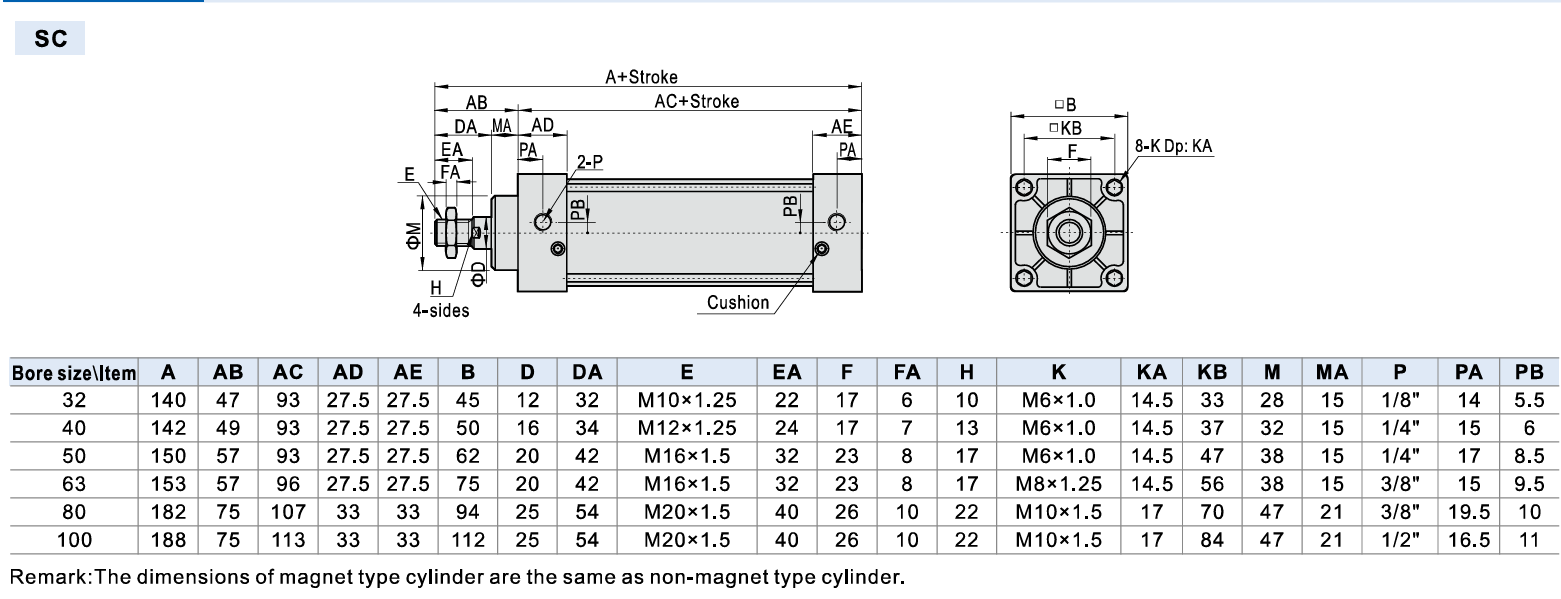
Common Pneumatic Cylinder Bore Sizes
Common bore sizes used in industrial applications include:
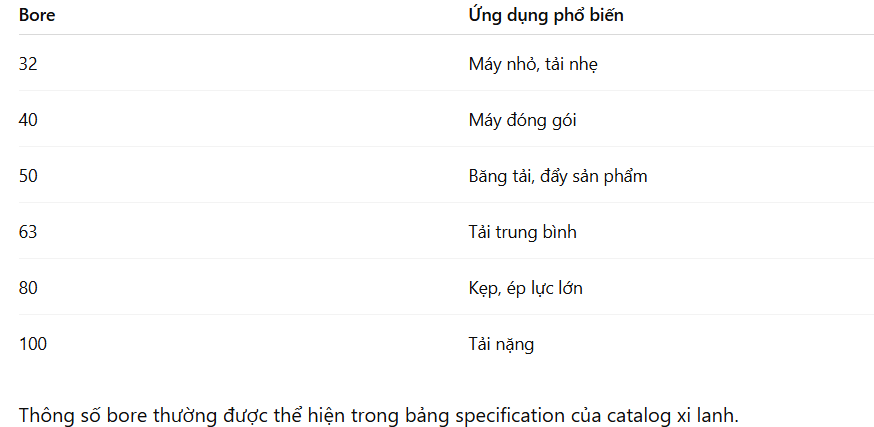
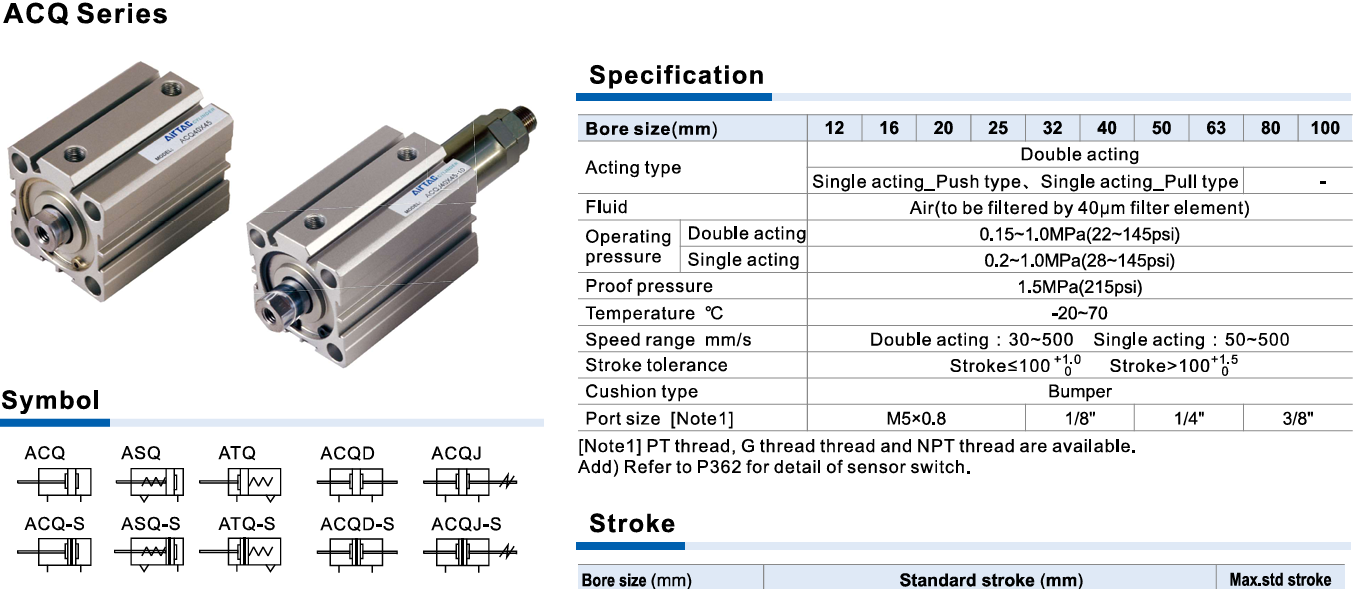
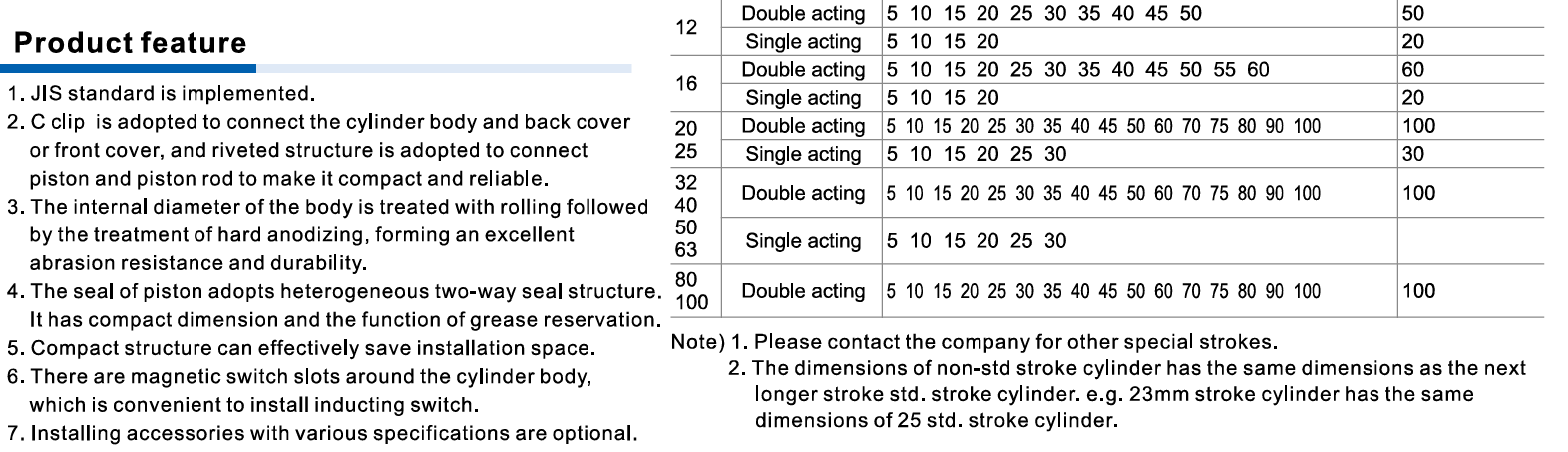
How to Choose the Right Bore Size
Choose Based on Load
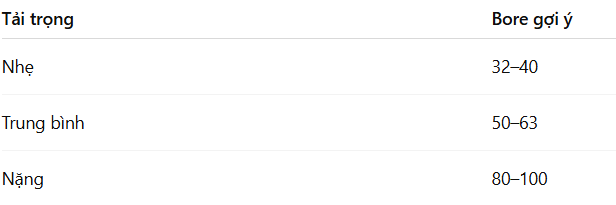
Choose Based on Application
Packaging Machines
- Usually use small to medium bore cylinders
Conveyor Systems
- Commonly use 50–63 bore cylinders
Heavy Clamping or Pressing
- Larger bore cylinders are recommended
👉 The key point:
- Choosing a bore too small → insufficient force
- Choosing a bore too large → unnecessary air consumption
Common Mistakes When Choosing Cylinder Bore
Choosing a Bore That Is Too Small
- Insufficient force
- Weak operation
- Reduced lifespan
Choosing a Bore That Is Too Large
- Excessive air consumption
- Higher cost
- Bulky system design
👉 This is why load calculation is important before selecting a cylinder.
Bore vs Stroke: What’s the Difference?
Many people confuse:
- Bore
- Stroke
However:
- Bore = piston diameter
- Stroke = travel distance
👉 Bore determines force
👉 Stroke determines movement distance
Conclusion
Bore is one of the most critical parameters when selecting a pneumatic cylinder. Choosing the correct bore helps:
- Ensure sufficient force
- Reduce air consumption
- Improve system durability
- Optimize operating costs
👉 If you are unsure which size to choose, consider:
- Load requirements
- Air pressure
- Installation space
- Real-world application needs
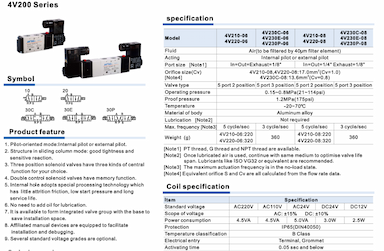
How to Select AirTAC Solenoid Valves from A-Z (With Technical Guidance)

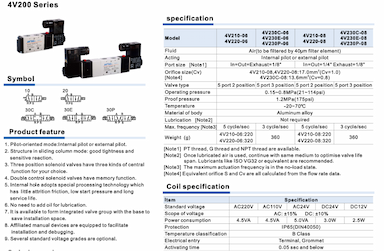
AirTAC Pneumatic Combo Solution – Valve + Cylinder + Air Filter
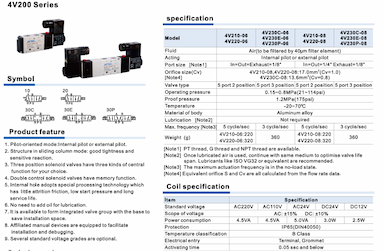
Where to Buy Genuine AirTAC Pneumatic Valves – Trusted Suppliers
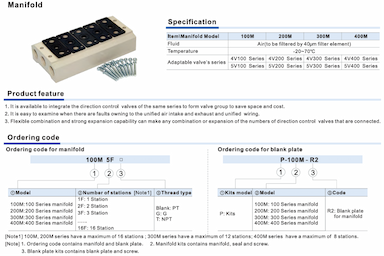
Latest AirTAC Solenoid Valve Price List – 2026 Update
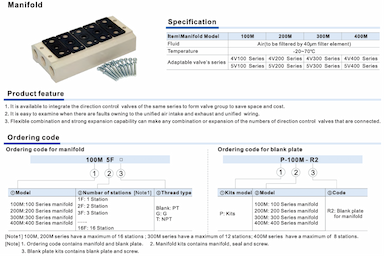
AirTAC Solenoid Valve Accessories – Quick Connects, Silencers, and Sub-Bases
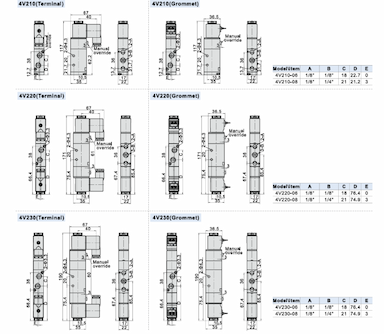
Top-Selling AirTAC 4V Series Solenoid Valve Models in 2026
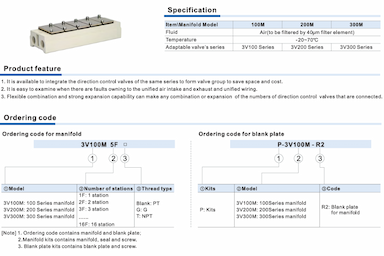
AirTAC Solenoid Valve Catalog – Full Guide to Download and Use the PDF
Complete AirTAC Solenoid Valve Specification Table – Your Ultimate Guide
AirTAC Solenoid Valve Maintenance Checklist – Troubleshooting Guide
Solenoid Valve Vibration and Noise – Quick Troubleshooting Guide for Pneumatic Systems